

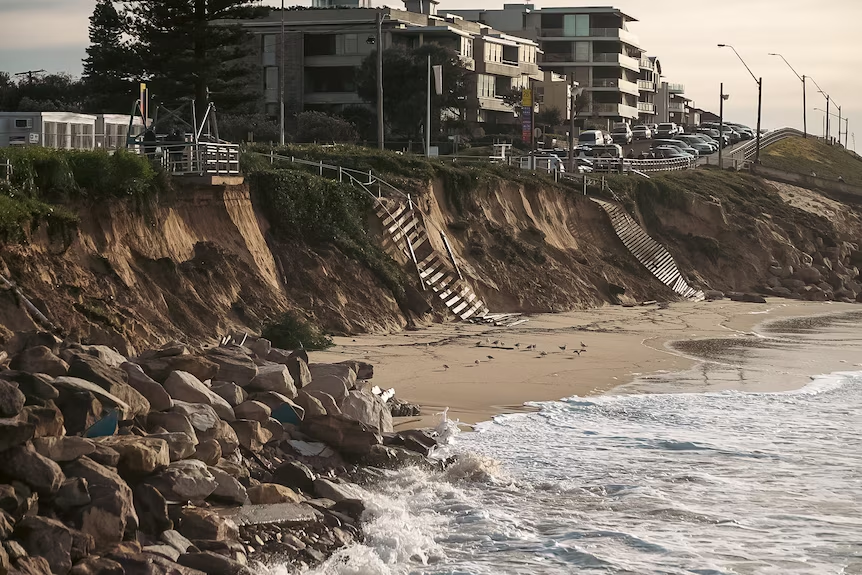
This guide unpacks what Tamarama property buyers agents typically flag, what buyers can check, and how risk is assessed in an Australian context.
What do Tamarama property buyers agents mean by “coastal erosion risk” in Tamarama?
They usually mean the chance that wave action, storms, and coastal processes will undermine land or structures over time. In Tamarama, Tamarama property buyers agents can assess how erosion risk varies locally, considering factors such as headlands, sand movement, drainage, and a property’s exposure to storm surge.
Tamarama property buyers agents often frame it as a “risk profile”, not a yes or no. Two homes on the same street can face different risks due to elevation, setbacks, and retaining structures.
Why do Tamarama buyers need to care if a property isn’t right on the sand?
Because erosion related impacts can reach further inland than many expect, especially during severe East Coast Low events. Even when the shoreline does not move dramatically, salt spray, wind loading, and water intrusion can increase maintenance and shorten the life of building elements.
Tamarama property buyers agents commonly warn that the market prices lifestyle first, then re-prices quickly when risk shows up in reports, insurance quotes, or council constraints.
Which Tamarama locations are usually seen as more exposed?
They generally point to properties closer to the beachfront, lower-lying pockets, and sites with direct exposure to wave energy and onshore winds. Homes near beach access points, cliff edges, or steep coastal slopes can also carry additional stability considerations.
That said, Tamarama property buyers agents will usually avoid blanket statements. They focus on the specific lot, the immediate topography, and how the structure sits on the land.
What documents do Tamarama property buyers agents check first for erosion clues?
They typically start with the contract and planning controls, then move quickly to council mapping and coastal hazard information. In NSW, buyers may see coastal management references through local planning instruments, coastal zone layers, or coastal hazard studies where available.
Tamarama property buyers agents also look for title matters, drainage easements, and any notations that suggest constraints on future works, because those can be deal-shapers in exposed coastal settings.
How do they assess whether the home’s construction is suited to a coastal site?
They look for signs the building is designed for salt, wind, and water. That often includes corrosion-resistant fixings, robust waterproofing, appropriate concrete cover to reinforcement, and detailing that limits water ingress.
Tamarama property buyers agents frequently recommend building and pest inspections with coastal experience. Coastal homes can hide issues behind fresh paint, including rusting steel lintels, spalling concrete, and balcony membrane failure.
What role do insurance and lender requirements play in erosion risk decisions?
They can influence the whole strategy. If insurance is expensive, limited, or loaded with exclusions, the property’s ongoing cost base changes immediately. Some lenders may also ask extra questions for high-risk coastal exposures, especially where stability, flooding, or known hazard overlays exist.
Tamarama property buyers agents often suggest buyers obtain indicative insurance quotes early, not after exchange, so surprises do not derail the purchase.
What are the most common “red flags” they say buyers miss?
They often mention four: recent patch repairs, poorly managed stormwater, aging retaining walls, and unapproved coastal-facing alterations. A fifth is “view protection assumptions”, where buyers expect they can rebuild or extend later, but planning controls or hazard lines restrict works.
Because of that, Tamarama property buyers agents tend to push for a clear paper trail on approvals, engineering, and waterproofing, not verbal assurances.
How do coastal management works affect property value and amenity in Tamarama?
They can cut both ways. Protective works may reduce risk, but they can also bring construction disruption, access changes, or altered beach conditions. In some cases, there may be future discussions about setbacks, dune management, or public asset protection that indirectly affects private lots.
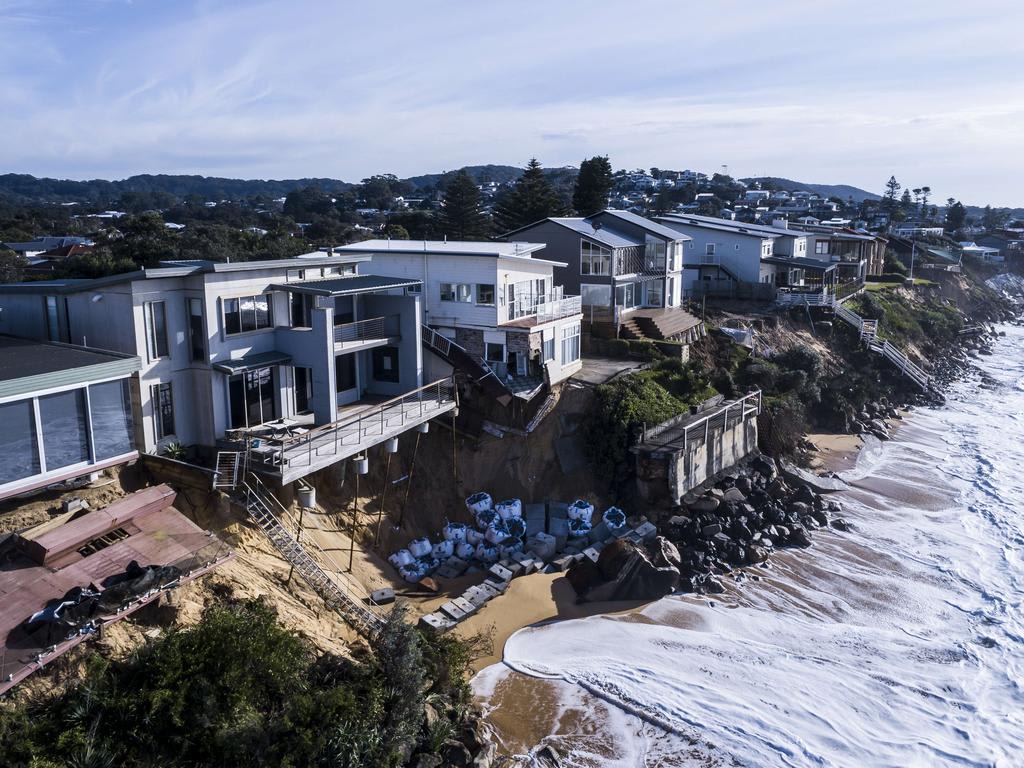
Tamarama property buyers agents generally advise buyers to read coastal plans like they would read strata records, especially when assessing Rose Bay property auctions, as these plans show what the area is likely to deal with over the next decade.
What due diligence steps do Tamarama property buyers agents recommend before making an offer?
They usually prioritise fast checks that surface “cannot fix” risks. That often includes reviewing council hazard maps where available, ordering a building inspection, confirming approvals for retaining and drainage works, and checking whether the site has a history of water movement.
Tamarama property buyers agents may also suggest an engineer’s opinion where there are steep slopes, retaining walls, or signs of ground movement, because those costs can be material and time-sensitive.
How should buyers interpret coastal hazard maps and studies in NSW?
They should treat them as planning and risk tools, not precise predictions for a single property. Hazard lines can be conservative, based on modelling assumptions and time horizons, and they may change as studies update.
Tamarama property buyers agents often advise buyers to ask what the mapping means for renovations, rebuilds, and approvals. A home can be liveable today, yet constrained tomorrow when an owner wants to add a level or rebuild a deck.
Are there practical ways buyers can reduce erosion-related risk after purchase?
Yes, but only within legal and engineering limits. Buyers can improve stormwater management, maintain drainage, keep waterproofing current, and use coastal-grade materials. They can also budget for more frequent exterior maintenance, including coatings, fixings, and balcony membranes.
Still, Tamarama property buyers agents tend to stress that risk reduction is not the same as risk removal. Some site conditions are structural, and they cannot be changed cheaply or quickly.
What questions do Tamarama property buyers agents suggest asking inspectors and engineers?
They encourage questions that translate risk into cost and timing. For example: What is the remaining life of retaining structures? Are there signs of subsidence or lateral movement? Is stormwater directed away from the building? Are balconies correctly waterproofed and drained? Are there corrosion indicators in metal elements?
Tamarama property buyers agents also want buyers to ask what maintenance schedule is realistic in a salt-exposed location, so the budget matches the lifestyle.
How do they balance lifestyle appeal with erosion risk in decision-making?
They usually weigh three things: the probability of impact, the consequence if it occurs, and the buyer’s time horizon. A buyer planning to hold long-term and renovate may need a higher margin of safety than a buyer seeking a shorter-term lifestyle base with limited structural changes.
That is why Tamarama property buyers agents often say the “right” coastal property is the one where the buyer understands the risk, can insure it, can maintain it, and can still sleep at night.
What’s the bottom line on Tamarama coastal erosion risk for buyers?
They generally say it is manageable when buyers do serious due diligence early. The best outcomes come from treating erosion risk as part of the property’s total cost and constraints, not a background concern.
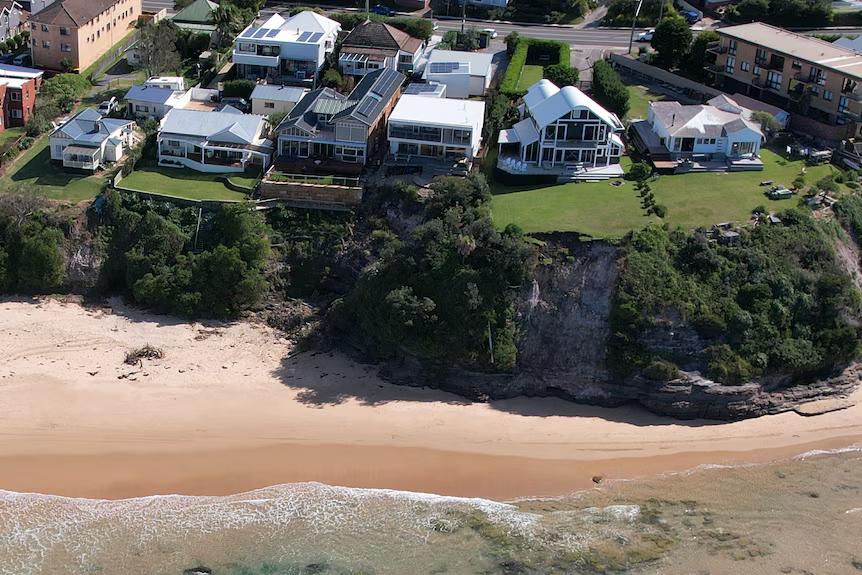
For many buyers, Tamarama property buyers agents see the winning approach as simple: confirm what can be built and maintained, price the ongoing costs honestly, and only then pay for the view.
FAQs (Frequently Asked Questions)
What does ‘coastal erosion risk’ mean in the context of Tamarama property purchases?
In Tamarama, ‘coastal erosion risk’ refers to the likelihood that wave action, storms, and natural coastal processes will gradually undermine land or structures. This risk varies locally due to factors like headlands, sand movement, drainage patterns, and exposure to storm surges. Property buyers agents assess this as a ‘risk profile’ rather than a simple yes or no, recognizing that even neighboring homes can face different levels of risk based on elevation, setbacks, and retaining structures.
Why should Tamarama property buyers be concerned about properties not directly on the sandline?
Even if a property isn’t right on the sand, erosion-related impacts such as salt spray, wind loading, and water intrusion can extend further inland than many expect—especially during severe East Coast Low events. These factors increase maintenance needs and can shorten the lifespan of building elements. Buyers agents emphasize that while lifestyle often drives market prices initially, values can quickly adjust when risks appear in reports, insurance quotes, or council constraints.
Which areas in Tamarama are generally considered more exposed to coastal erosion?
Properties closer to the beachfront, lower-lying pockets, and sites with direct exposure to wave energy and onshore winds are typically more exposed. Additionally, homes near beach access points, cliff edges, or steep coastal slopes may have added stability concerns. However, property buyers agents avoid blanket statements and focus on specific lot characteristics like immediate topography and how the structure is situated on the land.
What documents do Tamarama property buyers agents review to assess coastal erosion risks?
Agents usually begin with the contract and planning controls before examining council mapping and coastal hazard information. In New South Wales (NSW), coastal management references may be found in local planning instruments, coastal zone layers, or hazard studies. They also check title matters, drainage easements, and any notations indicating constraints on future works since these can significantly impact deals in exposed coastal settings.
How do Tamarama property buyers agents evaluate if a home’s construction suits a coastal environment?
They look for design features that withstand salt corrosion, wind pressures, and water exposure. Key indicators include corrosion-resistant fixings, robust waterproofing systems, appropriate concrete cover over reinforcement bars, and detailing that limits water ingress. Agents often recommend building and pest inspections by experts familiar with coastal conditions since issues like rusting steel lintels or spalling concrete can be hidden beneath fresh paint.
What role do insurance and lender requirements play regarding coastal erosion risks for Tamarama properties?
Insurance availability and cost significantly influence purchasing decisions because expensive or limited coverage increases ongoing costs. Lenders may impose additional scrutiny for high-risk properties affected by stability concerns, flooding potential, or hazard overlays. Property buyers agents advise obtaining indicative insurance quotes early in the process—before exchange—to avoid unexpected costs derailing the purchase.
<script type="application/ld+json">
{
  "@context": "https://schema.org",
  "@type": "BlogPosting",
  "mainEntityOfPage": {
    "@type": "WebPage",
    "@id": "https://centralhomeslk.com/what-tamarama-property-buyers-agents-say-about-coastal-erosion-risk/"
  },
  "headline": "What Tamarama Property Buyers Agents Say About Coastal Erosion Risk",
  "image": [
    "https://centralhomeslk.com/wp-content/uploads/2026/09/capi_0d31ad623b17ee477a775716837a374b_8d2a2e8a5aaad6e716421c2d2de4d8e1.jpeg",
    "https://centralhomeslk.com/wp-content/uploads/2026/09/0576b4d366f00562bcb5721378514c7f.avif",
    "https://centralhomeslk.com/wp-content/uploads/2026/09/3a3bc7b03336fe9b46983857cc6a109f.avif"
  ],
  "author": {
    "@type": "",
    "name": "Olivia Logic",
    "url": "https://centralhomeslk.com/author/admin/"
  },
  "publisher": {
    "@type": "Organization",
    "name": "Central Home Sydney",
    "logo": {
      "@type": "ImageObject",
      "url": "https://centralhomeslk.com/wp-content/uploads/2022/11/cropped-logo-chs.png"
    }
  },
  "datePublished": ""
}
</script>