

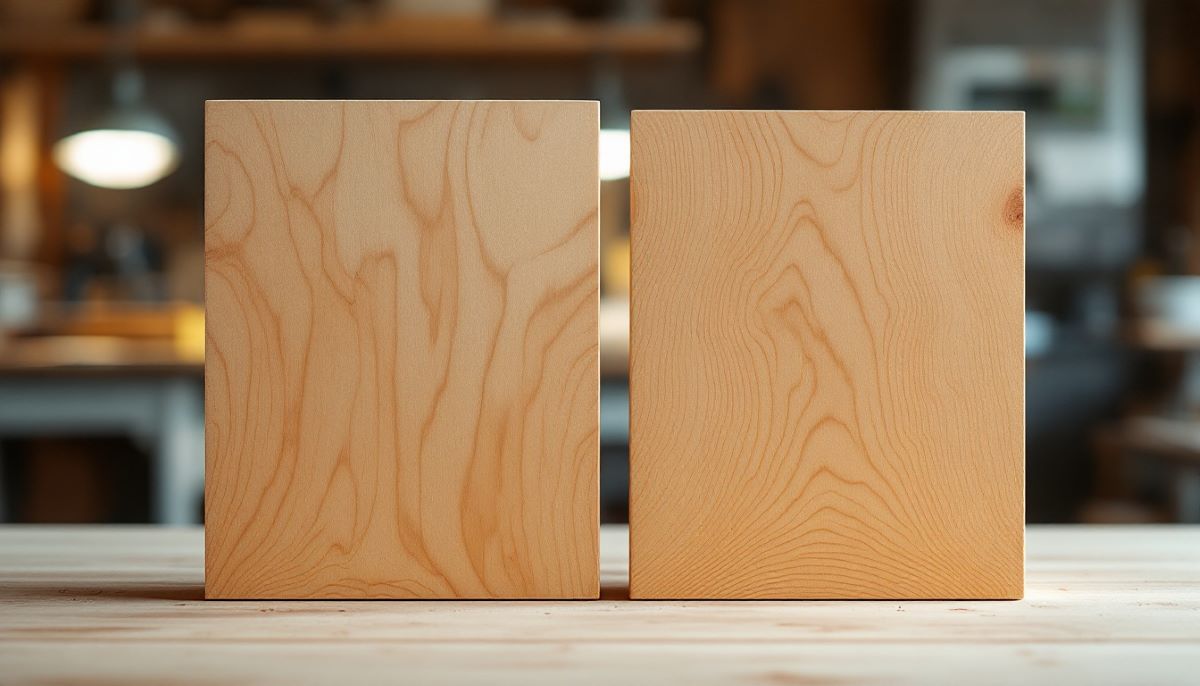
Formwork plywood is a temporary mold and support system used in construction for newly poured concrete. This specially designed engineered wood product needs to endure high hydraulic pressure while keeping its shape during the drying process.
In concrete construction, precision is key. Even small mistakes in formwork can result in expensive fixes, delays in the project, and problems with the structure. The final size, surface finish, and strength of the concrete depend entirely on how accurate the formwork system is that supports it during the critical drying stage.
Builders across Australia have made formwork plywood their material of choice for several compelling reasons:
- Dimensional stability under extreme hydraulic pressure exceeding 50 kN/m²
- Cross-laminated construction that resists warping, splitting, and deformation
- Moisture-resistant adhesives specifically formulated for wet concrete environments
- Reusability over 20-50 cycles when properly maintained
- Compliance with Australian Standards (AS/NZS 2269)
- Adaptability to harsh Australian climates including heat, heavy rain, and coastal humidity
The combination of structural strength, cost-effectiveness through multiple reuses, and reliable performance has established formwork plywood as an essential material for achieving project accuracy across residential, commercial, and infrastructure developments throughout the continent.
What Is Formwork Plywood and How Does It Enhance Project Accuracy?
Formwork plywood serves as a temporary mold that contains and shapes freshly poured concrete until it cures and gains sufficient strength. This specialized engineered wood product creates the framework that determines the final dimensions, surface quality, and structural integrity of concrete elements in construction projects.
The definition of formwork plywood goes beyond just holding things in place—it is also a precise tool that directly affects how accurate each concrete pour will be. When builders put up formwork panels, they are essentially creating a space that will be filled with concrete. This makes it crucial for the plywood to maintain its shape in order to meet specific measurements.
The Engineering Behind Cross-Laminated Construction
The cross-laminated structure is what makes formwork plywood reliable. Manufacturers arrange thin wood veneers in alternating grain directions, with each layer rotated 90 degrees from the adjacent ones. This perpendicular arrangement creates a balanced panel that resists movement in all directions.
Key structural benefits include:
- Elimination of natural wood’s tendency to expand or contract along the grain
- Enhanced resistance to splitting when nails or screws penetrate the surface
- Superior load distribution across the entire panel surface
- Reduced warping even under sustained hydraulic pressure
The alternating grain pattern transforms individual wood layers into a unified structural element. When wet concrete exerts pressure against the formwork, the cross-laminated design prevents buckling or bowing that would compromise the shape of the concrete casting mold.
How Dimensional Stability Translates to Precision
Dimensional stability determines whether a concrete element meets architectural specifications or requires costly corrections. Formwork plywood maintains its shape and size throughout the entire concrete curing process, which can last several days depending on environmental conditions and concrete mix design.
Standard plywood expands when exposed to moisture, potentially altering dimensions by several millimeters across a large panel. Formwork plywood’s moisture-resistant adhesives and protective surface treatments prevent this expansion. The result is concrete walls, columns, and slabs that match design drawings within tolerances of 2-3mm rather than centimeters.
Temperature fluctuations on construction sites pose another challenge. Australian job sites experience significant temperature variations between day and night, particularly in inland regions. Formwork plywood’s ability to resist these temperature-induced changes further ensures precision in concrete construction.
What Types of Formwork Plywood Are Commonly Used by Builders Across Australia?
Australian builders select from five primary formwork plywood types, each engineered for specific structural demands and finishing requirements. The choice depends on load capacity needs, desired concrete surface quality, and project complexity.
F14 Plywood: The Standard Workhorse
F14 plywood serves as the baseline choice for most residential and light commercial concrete work. This grade handles moderate structural loads effectively, making it suitable for standard walls, columns, and basic slab pours. The “F14” designation indicates a stress grade of 14 megapascals, providing adequate strength for projects where extreme hydraulic pressure isn’t a primary concern. Builders appreciate its balance between performance and cost-effectiveness for everyday formwork applications.
The material performs reliably in typical concrete pours up to 3 meters in height. Its structural capacity meets requirements for most single-story residential foundations, retaining walls under 2 meters, and standard concrete beams. Many builders stock F14 as their go-to option for projects with straightforward specifications.
F17 Plywood: Heavy-Duty Performance
F17 plywood delivers enhanced structural capacity with a stress grade of 17 megapascals, positioning it as the preferred choice for demanding applications. High-rise buildings, large-span concrete pours, and infrastructure projects requiring superior load-bearing capabilities rely on this grade. The increased strength allows for greater spacing between support structures, reducing the amount of bracing needed during concrete placement.
This grade excels in situations involving:
- Multi-story building construction with significant concrete volumes
- Bridge decks and elevated roadways
- Industrial facilities with heavy structural loads
- Deep foundation walls exceeding 4 meters
HDO Plywood: Architectural Excellence
HDO plywood (High-Density Overlay) features resin-impregnated fiber surfaces that create exceptionally smooth concrete finishes. The overlay consists of thermosetting resin-treated cellulose fibers bonded to the plywood core under heat and pressure. This specialized surface produces architectural-grade concrete requiring minimal post-pour treatment.
Builders specify HDO for projects where concrete aesthetics matter: exposed aggregate walls, decorative columns, and feature panels
How Does Formwork Plywood Differ from Normal Plywood in Construction?
The main difference between formwork plywood and normal plywood is in the type of glue used and how the surfaces are treated. Formwork plywood uses phenol-formaldehyde glue to hold its layers together, while regular construction plywood uses urea-formaldehyde adhesives that break down when they come into contact with moisture and the alkaline environment of wet concrete.
The Importance of Moisture-Resistant Adhesives
Phenol-formaldehyde adhesives create waterproof bonds that stay strong even when exposed to water for long periods and the high pH levels of concrete. This resistance to chemicals prevents delamination, which is a common failure mode where the layers of plywood separate under pressure. On the other hand, standard plywood with urea-formaldehyde glue starts to break down within hours of being in contact with concrete, causing the panels to swell, warp, and ultimately fail structurally.
The performance difference becomes clear during concrete pours. Formwork plywood can handle hydraulic pressures over 50 kN/m² while still maintaining its shape. Normal plywood would buckle or delaminate under these conditions, leading to inaccuracies in the concrete structure and potentially dangerous situations on construction sites.

Specialized Surface Treatments for Enhanced Performance
Formwork plywood undergoes specific surface treatments that are not found in standard plywood:
Medium Density Overlay (MDO) consists of resin-impregnated fiber sheets thermally bonded to the plywood surface. This coating creates a hard, smooth barrier that resists:
- Moisture absorption from wet concrete
- Chemical attack from concrete alkalinity
- Surface abrasion during installation and stripping
- Adhesion of cured concrete to the formwork
Phenolic resin films provide an even stronger protective layer. These dark brown or black coatings are applied using high-pressure lamination, resulting in a surface that is nearly impermeable. The non-stick properties of this coating allow for easy release of concrete without the need for excessive use of release agents, saving both time and money.
Impact on Concrete Finish Quality
The protective coatings on formwork plywood directly affect the appearance of the finished concrete. The treated surfaces of the plywood transfer their smoothness to the concrete, resulting in finishes that require minimal post-pour treatment. This feature is especially important for architectural projects that require exposed concrete surfaces.
In contrast, marine plywood, another specialized type of plywood, also exhibits moisture-resistant properties due to its unique manufacturing process and adhesive usage. However, its primary application lies in areas prone to constant moisture exposure such as boat building or high-humidity environments, rather than in formwork for concrete structures.
Why Do Builders Value the Durability and Reusability of Formwork Plywood?
Builders prioritize formwork plywood because it delivers exceptional hydraulic pressure resistance while offering multiple reusability cycles that dramatically reduce project costs. The material’s engineered construction allows it to withstand the intense forces exerted by wet concrete without compromising structural integrity or dimensional accuracy.
Exceptional Hydraulic Pressure Performance
Formwork plywood maintains its shape and stability under hydraulic pressure exceeding 50 kN/m², a critical requirement when supporting large concrete pours. This pressure resistance stems from the cross-laminated structure where alternating grain directions distribute forces evenly across the panel. When concrete is poured into formwork, it generates substantial lateral pressure that increases with pour height and concrete density. Standard building materials would buckle or deform under these conditions, but formwork plywood’s engineered design prevents warping, bulging, or structural failure during the curing process.
The material’s ability to resist deformation directly impacts project accuracy. Even minor flexing of formwork panels can create irregularities in concrete surfaces, leading to dimensional discrepancies that compromise structural specifications. Builders working on high-rise developments or infrastructure projects cannot afford such variations, making the pressure resistance of formwork plywood non-negotiable for maintaining tight tolerances.
Extended Reusability Cycles Reduce Material Costs
Quality formwork plywood delivers 20 to 50 reusability cycles when properly maintained, transforming what appears to be a premium-priced material into a cost-effective investment. Each reuse cycle represents significant savings compared to single-use formwork alternatives or materials that degrade after just a few applications. Builders can amortize the initial purchase cost across multiple projects, reducing the per-use expense to a fraction of the upfront investment.
The phenolic resin coatings and moisture-resistant adhesives protect the wood core from the alkaline environment of concrete, preventing chemical degradation that would otherwise limit service life. After each concrete pour, the smooth film-faced surface releases cleanly without leaving residue or requiring aggressive cleaning methods that damage the panel. Simple washing with water and mild detergent prepares the plywood for immediate reuse, eliminating downtime between applications.
Why Is F17 Film-Faced Plywood Particularly Popular Among Australian Builders?
F17 film-faced plywood Australia has become the go-to choice because it meets the stringent AS/NZS 2269 standard, guaranteeing consistent structural performance across diverse construction applications. This certification ensures builders receive material that delivers predictable load-bearing capacity, essential for maintaining project accuracy and safety compliance on Australian job sites.
What Makes AS/NZS 2269 Compliance Critical?
The AS/NZS 2269 standard establishes rigorous benchmarks for structural plywood performance in Australia and New Zealand. F17 film-faced plywood must demonstrate specific bending strength, stiffness properties, and bond integrity to earn this classification. Builders trust this rating because it eliminates guesswork—every sheet purchased carries verified structural capabilities suitable for demanding formwork applications.
This standardization proves particularly valuable when calculating formwork designs. Engineers can confidently specify F17 knowing it will support the calculated loads without requiring additional safety margins that increase material costs. The consistency between batches means builders experience fewer surprises during installation, reducing the risk of project delays caused by substandard materials.
How Do Phenolic Resin Coatings Handle Australia’s Climate Extremes?
Water-resistant phenolic resin coatings on both faces transform F17 plywood into a weather-defying workhorse. These coatings create an impermeable barrier that repels moisture even during extended exposure to heavy rainfall common across tropical and subtropical regions. The dual-sided protection prevents water penetration from any angle, whether from wet concrete on one side or external weather conditions on the other.
Other Resources : Phenol in freshwater and marine water
Australian construction sites face unique environmental challenges:
- Intense UV radiation that degrades unprotected wood surfaces
- High humidity levels in coastal areas promoting fungal growth
- Temperature fluctuations causing expansion and contraction
- Alkaline concrete that chemically attacks untreated wood
The phenolic film addresses each challenge. Its dark, smooth surface reflects less heat than bare wood, reducing thermal stress during scorching summer conditions. The chemical resistance prevents alkaline concrete from degrading the wood core, maintaining structural integrity through multiple pours. Coastal builders particularly value this feature when working
What Other Construction Applications Do Builders Use Formwork Plywood For?
Formwork plywood is used for more than just its main purpose of shaping concrete. Builders all over Australia use this flexible material for various other tasks such as:
- Wall bracing: Providing support to framed walls during construction.
- Scaffolding platforms: Creating sturdy and slip-resistant surfaces for workers at heights.
- Flooring systems: Offering a strong base for temporary or permanent floors.
- Temporary structures: Building makeshift buildings or supports that need to be strong and reliable during construction.
Wall Bracing
One of the most important secondary uses of formwork plywood is for wall bracing. F17 film-faced plywood is specifically designed to provide the necessary strength and stability to support framed walls while they are being built. This is especially crucial in projects that involve multiple stories, whether they are residential or commercial.
The unique cross-laminated structure of this type of plywood makes it resistant to sideways forces caused by wind and construction activities. This ensures that the building remains aligned until permanent bracing systems can be installed. This application takes advantage of the same dimensional stability that makes formwork plywood excel in concrete work.
Scaffolding Platforms
Formwork plywood also plays a vital role in scaffolding platforms. These platforms are used by construction crews working at heights, and they require surfaces that can withstand heavy loads without bending, warping, or deteriorating over time.
The load-bearing capacity and slip-resistant properties of formwork plywood make it an ideal choice for these applications. The phenolic resin coating on film-faced varieties creates a weather-resistant surface that maintains traction even in wet conditions, reducing workplace accidents while supporting equipment and materials weighing hundreds of kilograms.
Temporary Site Infrastructure
On Australian construction sites, temporary fencing and hoardings are commonly made from formwork plywood. Site managers opt for this material due to several reasons:
- It is strong enough to endure wind loads and accidental impacts.
- It provides solid visual barriers for security and privacy.
- It can be reused across multiple projects, leading to cost savings in procurement.
- Compared to other materials, it is quicker to install and dismantle.
- Its appearance remains intact throughout extended periods on-site.
The same moisture resistance that protects formwork plywood from concrete alkalinity also safeguards these temporary structures from rain, humidity, and UV exposure. Sites located in coastal areas particularly appreciate this durability since salt-laden air accelerates the deterioration of standard timber products.
Speed and Efficiency Advantages
The ease of handling formwork plywood delivers directly impacts construction timelines. Standard sheet dimensions (typically 1200mm × 2400mm) allow two workers to maneuver panels without mechanical assistance, accelerating installation across various applications. Pre-cut sheets arrive on site ready for immediate deployment, eliminating time-consuming milling operations.
See Also : How to Choose the Right Scaffold Mesh for Australia’s Toughest Construction Environments
How Does Sustainability Factor Into the Choice of Formwork Plywood in Australia?
Environmental responsibility has become a critical consideration for Australian builders selecting formwork plywood. Many construction companies now prioritize materials that demonstrate verifiable sustainable forests certification, recognizing that their purchasing decisions directly impact global forestry practices and carbon footprints.
The Role of Sustainable Forest Certification
FSC (Forest Stewardship Council) and PEFC (Programme for the Endorsement of Forest Certification) certifications provide builders with assurance that their formwork plywood originates from responsibly managed forests. These internationally recognized standards verify that timber harvesting maintains biodiversity, protects indigenous rights, and ensures forest regeneration. When builders specify FSC or PEFC certified formwork plywood, they support forestry operations that plant more trees than they harvest, creating a net positive environmental impact.
The Sustainability Benefits of Reusable Formwork Plywood
The reusability factor of formwork plywood amplifies its sustainability credentials significantly. A single sheet of quality F17 film-faced plywood can withstand 20-50 concrete pours when properly maintained, dramatically reducing the volume of virgin timber required per project. This extended lifecycle means fewer trees harvested, less manufacturing energy consumed, and reduced transportation emissions compared to single-use alternatives.
The Influence of Australian Construction Regulations
Australian construction regulations increasingly encourage sustainable material choices through green building rating systems like Green Star. Projects pursuing environmental certifications gain points by demonstrating responsible material sourcing, making sustainable forests certification a practical business advantage rather than merely an ethical choice. Builders working on government contracts or commercial developments often face explicit requirements to source certified sustainable materials.

Addressing Timber Waste with Durable Formwork Plywood
The economic case for certified formwork plywood strengthens when considering waste reduction. Traditional construction generates substantial timber waste destined for landfills. Formwork plywood’s durability and reusability directly address this problem by keeping materials in circulation across multiple projects. Some builders establish internal tracking systems to monitor each sheet’s usage cycles, maximizing value extraction before eventual recycling.
The Overlooked Benefit of Carbon Sequestration
Carbon sequestration represents another environmental benefit often overlooked in discussions about formwork plywood. Wood products store carbon absorbed during tree growth, effectively locking it away from the atmosphere for the material’s entire service life. Certified sustainable forestry ensures this carbon storage occurs within actively managed forest systems that continue absorbing atmospheric carbon through new growth.
Response from Australian Suppliers
Australian suppliers have responded to demand for sustainable options by expanding their certified product ranges. Major metropolitan timber yards
Where Can Builders Find Quality Formwork Plywood Across Australia?
Formwork plywood suppliers in Australia have wide distribution networks that cover all major cities and regional construction areas. This means that builders can easily find the materials they need without any delays in their projects.
1. Metropolitan Distribution Centers
In major cities like Sydney, Melbourne, Brisbane, Perth, and Adelaide, there are specialized timber yards and construction material suppliers. These suppliers have large stocks of different types of plywood, including F14, F17, and film-faced variants. They typically carry:
- Standard thicknesses ranging from 12mm to 25mm for various structural needs
- Sheet dimensions such as 2400mm x 1200mm and custom-cut sizes
- Multiple surface finishes including standard MDO and premium HDO coatings
- Specialty products like curved formwork plywood for architectural applications
2. Regional Accessibility
Regional construction markets benefit from established supply chains connecting coastal and inland building sites to quality formwork plywood. Suppliers in Newcastle, Wollongong, Gold Coast, Geelong, and other secondary cities maintain stocks suitable for local residential and commercial projects. Delivery services extend to remote construction sites, supporting infrastructure development across rural Australia.
3. Specialized Timber Merchants
Dedicated formwork plywood suppliers Australia-wide offer technical expertise beyond basic product supply. These specialists provide:
- Grade selection guidance matching plywood specifications to concrete pressure requirements
- Reuse optimization advice extending material lifespan through proper handling protocols
- Compliance documentation confirming AS/NZS 2269 certification for regulatory approval
- Volume pricing structures reducing costs for large-scale developments
4. Online Procurement Options
Digital platforms now complement traditional supplier relationships, enabling builders to compare specifications, pricing, and availability across multiple vendors. Online ordering systems facilitate rapid quotations and scheduled deliveries coordinated with construction timelines.
5. Quality Verification Standards
Reputable suppliers stock only certified products meeting Australian Standards for structural plywood. Builders should verify:
- Manufacturer compliance stamps on each sheet
- Batch testing certificates for adhesive bond strength
- FSC or PEFC sustainability credentials
- Warranty terms covering delamination and structural failure
6. Trade Account Benefits
Establishing accounts with formwork plywood suppliers can lead to additional advantages such as priority access to new stock arrivals or exclusive discounts on bulk purchases.